
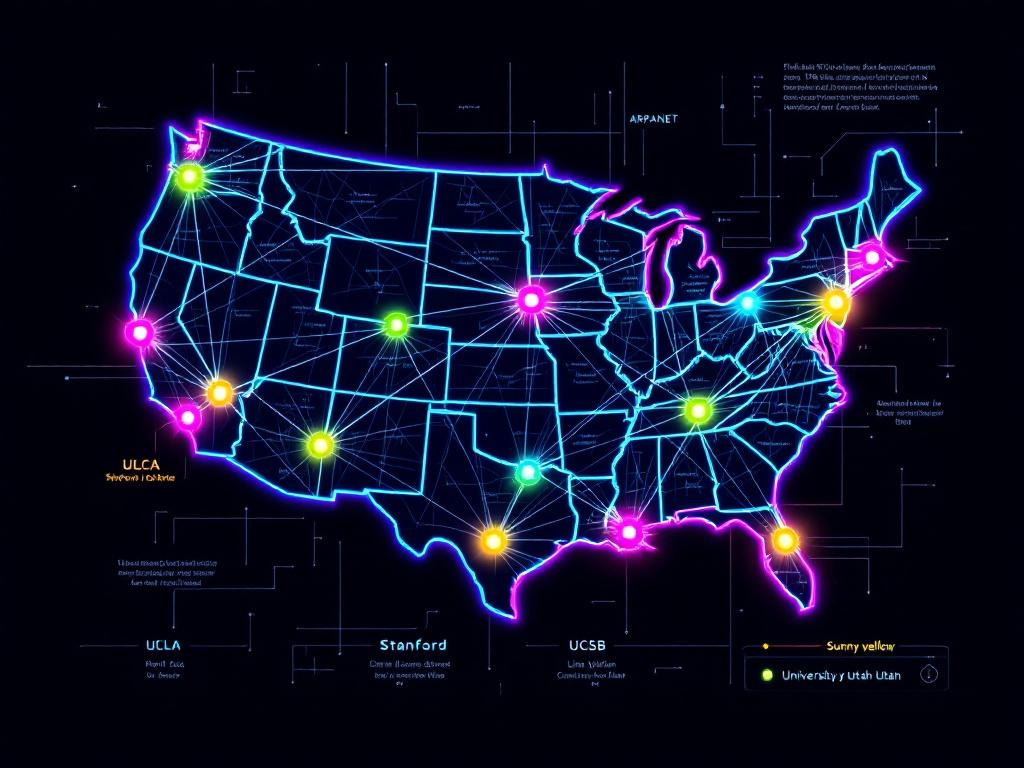
Did you know the Internet was invented to allow the US Military to react to news of Nuclear Warfare against the Soviet Union within a moment’s notice. If this fact surprises you read on to find out why.
In my last article I explained how both nuclear weapons and modern computing were invented hand-in-hand with each other.
In this article I explain the major development threats of nuclear destroying the world had on computer technology: the invention of the Internet.
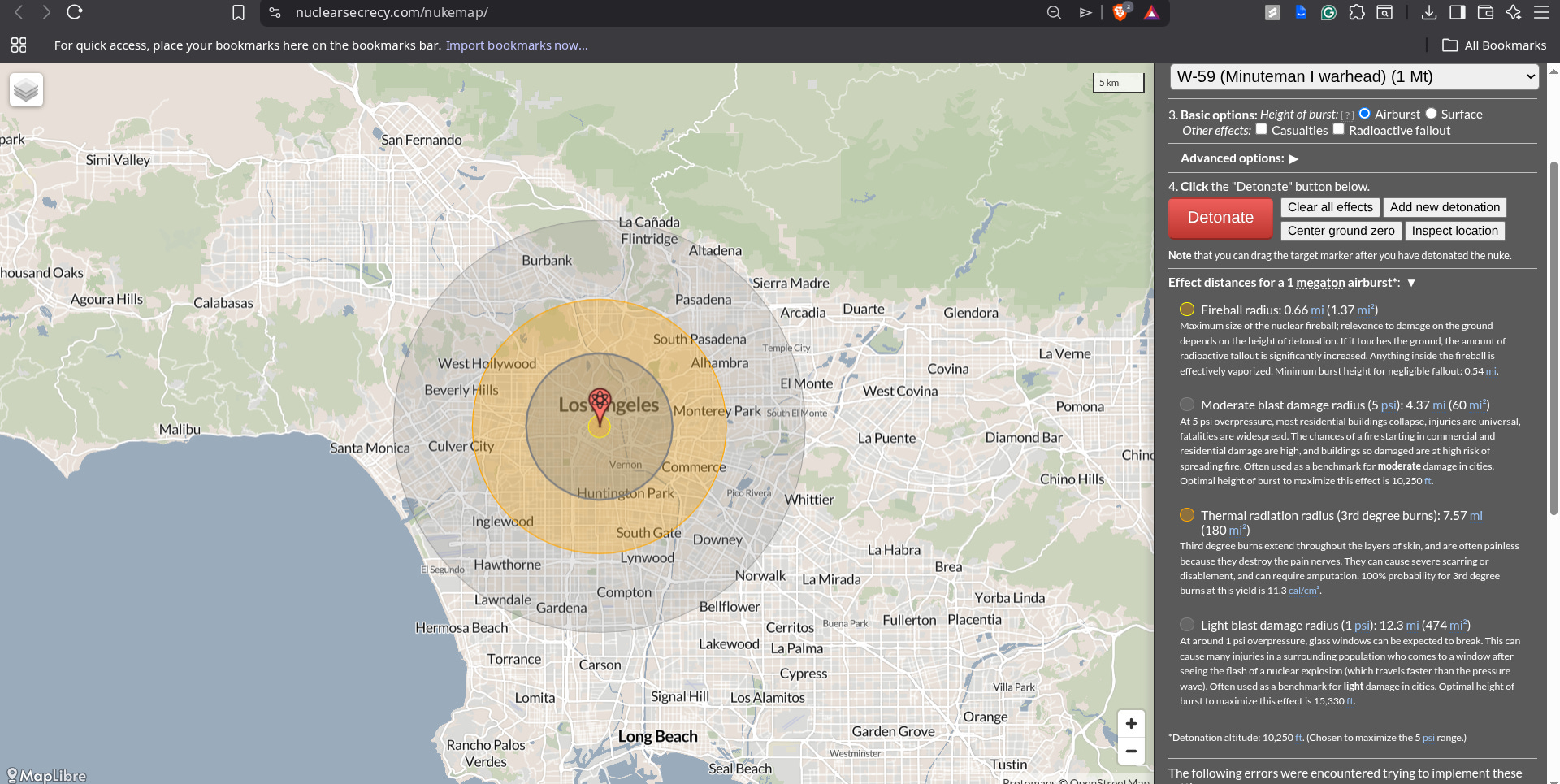
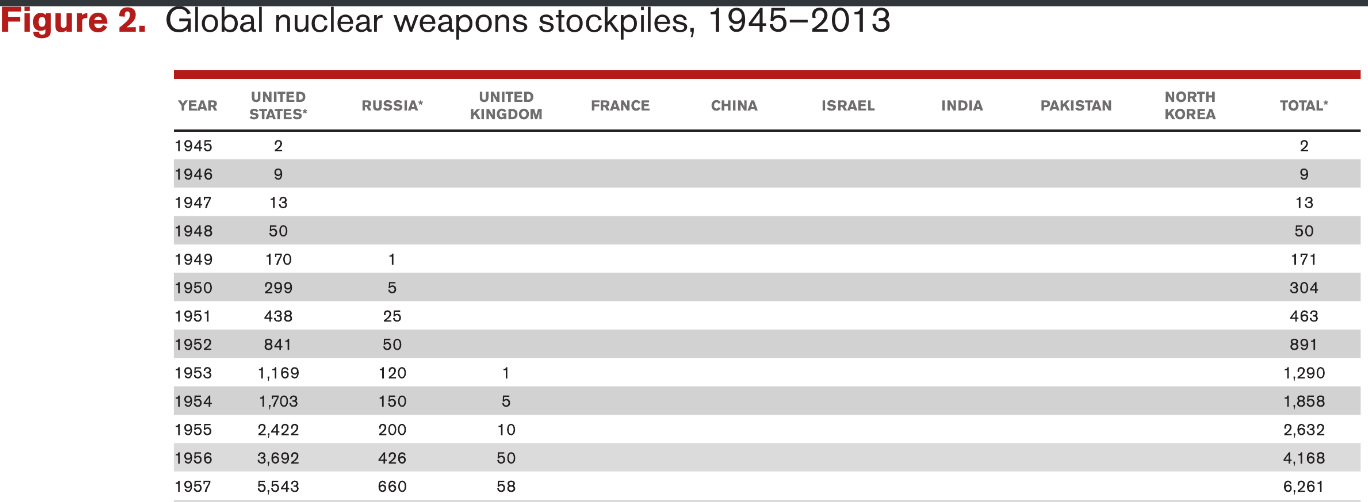
By 1957 both the US and USSR had produced enough nuclear weapons to destroy the modern world as we know it.1
Operation PaperClip: The Dawn of the Cold War
One of the best books I found that documents how nuclear threats led to the invention of the modern Internet in the US is Sharon Weinberger’s The Imagineers of War. I strongly recommend reading this book to learn more about the story of the Internet during the Cold War. Weinberger is an excellent author explaining the backstory. Throughout this blog I will frequently cite her account and highly recommend you acquire a copy to supplement your learning.
Weinberger explains that shortly after the world witnessed the bombing of Japan both the US and the USSR sent intelligence committees to Germany to steal Germany’s rocket technology. Both the US and USSR knew that whoever would be the next leading military nation would be the one that could launch “long-range, reliable rockets” that could target any other nation over the seas—also known as an intercontinental ballistic missile. Little could be done to stop one once launched. It is like trying to stop a bullet once fired in the sky. Whereas the USSR prioritized manpower the US focused on capturing the leading minds of rocket science: Werner von Braun’s rocket science team.2
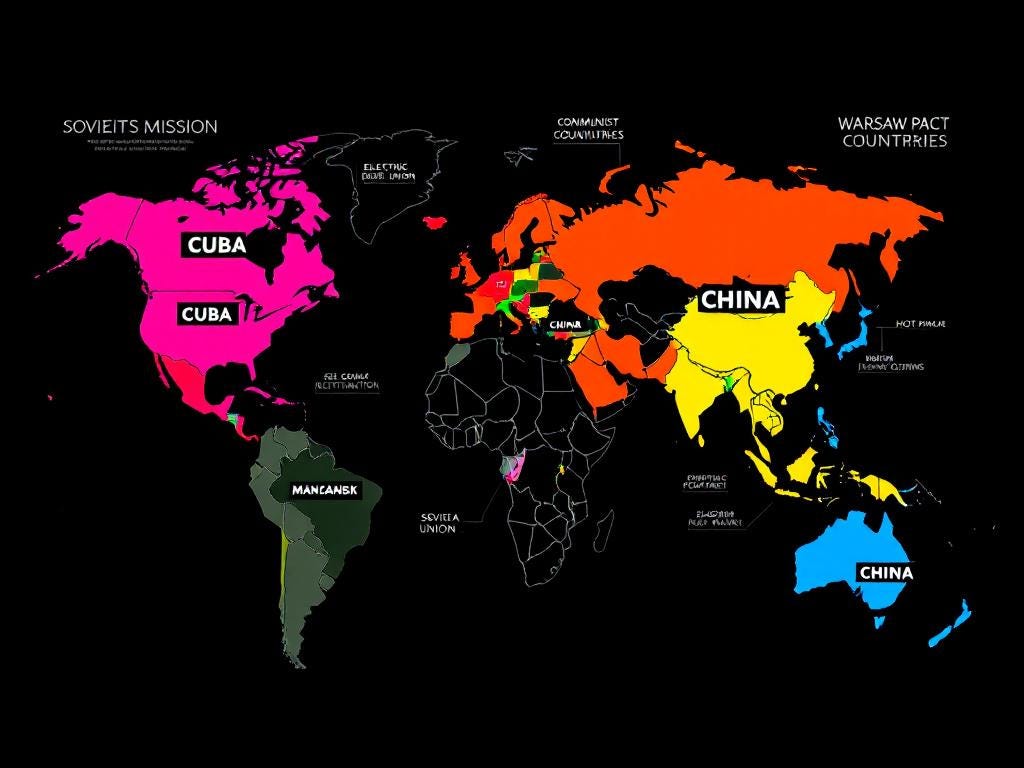
Originally the US Federal Government was reluctant to continue investing in the development of nuclear weapons after World War II as budgets were tight. But with the first detonation of an atomic bomb by the USSR in 1949, the launching of Soviet Union rockets that could fly longer ranges and carry heavier loads, the fall of many countries under the grip of the USSR, the fall of China to Communism, and the rise of Communism in North Korea—the US began to really feel the safety of the US was at odds against a growing Communist Empire.3
By 1952 the US detonated its first hydrogen bomb: Ivy Mike. With the equivalent power of 10.4 Megatons of TNT Ivy Mike was over a thousand times stronger than the nuclear bomb detonated at Hiroshima. After the US later figured out how to reduce the physical size of the weapon it could be packed into an intercontinental nuclear missile and launched. Even if the weapon did not accurately hit the intended target the blast radius would be enough to make up for a lack of accuracy.4

It should be thus no surprise that when President Eisenhower announced the US’s plan to launch a small satellite the USSR quickly developed their own: Sputnik. Like the US the USSR was concerned the US was racing develop their own intercontinental ballistic missiles to threaten the USSR.
Sputnik Drives The Launch of DARPA
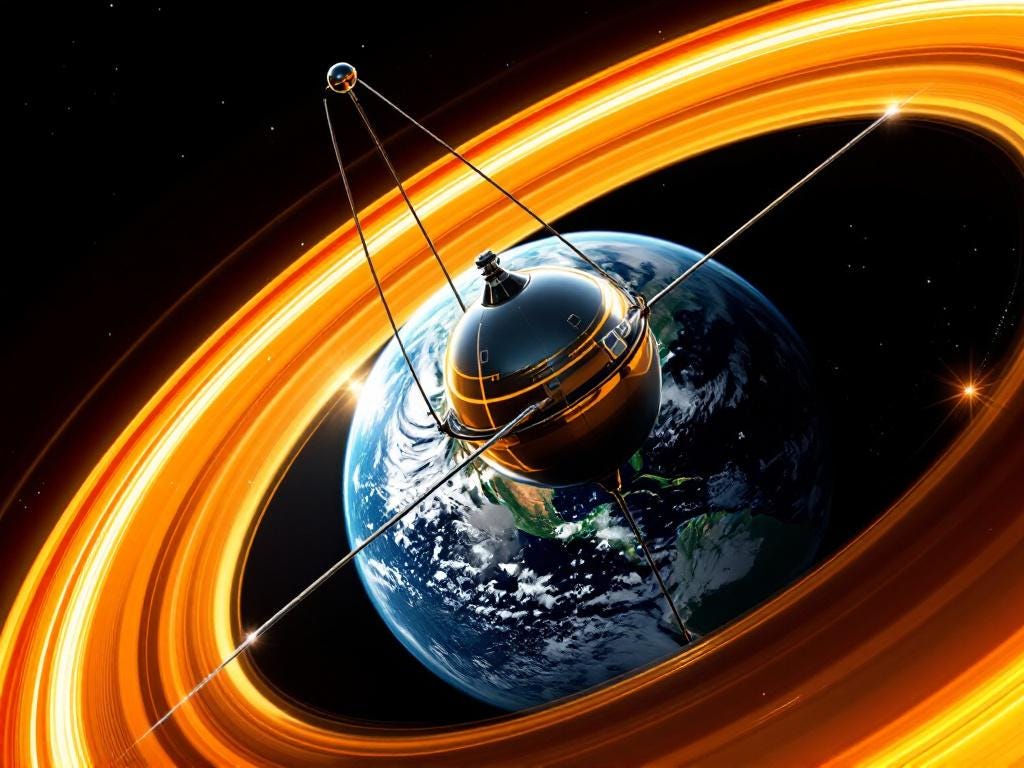
At first it may seem incredible that by 1957 the USSR could rightfully claim it was ahead of the US in space technology with the successful launch of Sputnik. However having a centralized organization called the Communist Regime in the USSR has its advantages over a democratic one.
In an authoritarian regime like the USSR there were less people that were allowed to disagree with the Communist Party’s priorities in setting up a military state to fight against the US. Meanwhile democratic elections demanded giving people of different political views time to argue and make decisions.
Drew Pearson, a well-known writer for the Washington Merry-Go-Round column—did a great job capturing public fear of what Sputnik implied the USSR was capable of: “The same missile that launched the 184-pound Sputnik, our experts say, could also shoot a rocket 239,000 miles to the moon”.
In response to the launch of Sputnik President Dwight D. Eisenhower secretly authorized the formation of Defense Advanced Research Projects Agency (DARPA) on February 7, 1958. DARPA was formed eight months before National Aeronautics Space Administration (NASA) and had a secret mission: to prepare the US against future nuclear warfare against the USSR.5
The Founding of NASA
As the US watched the USSR launch more satellites into space—including one that carried a dog—everyone talked about how the USSR would one day be able to send real people into space. That includes people that can threaten the US with intercontinental ballistic missiles.
On August 15, 1958, to help the US compete with the USSR in that regard Roy Johnson authorized Werner von Braun to begin a program that would allow US citizens to travel to space through rocket.
The United States Federal Government decided that the mission to put US citizens into space must belong to a public, civilian agency and not a secretive military one like DARPA. That is why on October 1st, 1958, DARPA handed all their satellite programs to National Aeronautics and Space Administration (NASA).6
The Cuban Missile Crisis Births ARPANet
On October 16, 1962 US President John F Kennedy discovered nuclear missiles housed in Cuba. By that time Cuba fell to Communism led by Fidel Castro—a ruler that Kennedy had attempted to assasinate countless times. Kennedy’s administration concluded the Cuban nuclear missiles can strike the White House within merely 13 minutes. Not a lot of time to react.
The Cuban Missile Crisis throttled the US into DEFCON 2—which is only one alert level away from true nuclear war. Indeed there has been no event in the US where the US was closer to nuclear warfare than this one. Amidst the mass panic military officials could finally see just how reliant military commanders had become on computers. Yet people noticed the biggest hurdle to fully adopting computer technology was the difficulty of sending messages from one machine to another remote machine. The Crisis birthed interest in remote machines speaking to each other through electronic communication. After all how can you control your nuclear weapons if you cannot share information through the very machines that controlled them in real time?7
J.C.R. Licklider Helps Birth ARPANET: The Precursor to the Internet
Trained in pyschology, Joseph Carl Robnett Licklider became interested in computers when he first interacted with one at MIT’s Lincoln Laboratory. At the lab Licklider was tasked with helping the US connect twenty-three air-defense sites. The computer system, known as Semi-Automatic Ground Environment, was designed to help humans calculate the best way to respond to an incoming Soviet bomber attack.
Although useless by the time the USSR made their own production-ready intercontinental ballistic missiles, SAGE left an impresson upon Licklider. Before SAGE computers were machines that you fed punch cards and waited to spit out answers. SAGE was the first computer system where users were expected to interact with the live machine for long streches of time. SAGE displayed visual information on consoles. Users would interact with the consoles using physical controls.
Licklider had the foresight to see a future where humans would interact with personal computers that fit on their desktops instead of taking up entire rooms. Moreso several distinct users would simultaneously perform distinct tasks on the same machine: a concept called time-sharing. Licklider documented his vision in his article “The Truly SAGE System ; or, Toward a Man-Machine System for Thinking”.
DARPA sponsored programs at MIT. It was at DARPA-sponsored MIT Laboratories that famous Internet technologies including electronic mail were invented.
Before leaving DARPA Licklider chose Ivan Sutherland to replace him in his task of establishing a computer network.8A scientist working for DARPA named Ivan Sutherland wanted to convince researchers at the University of California Los Angeles to create the first timesharing computer network featuring three of UCLA’s computers. However at the time UCLA researchers were scared of future hackers compromising their machines and using up their scarce computer resources. Disgruntled Sutherland allowed Robert Taylor to take over.
Although none of the scientists I mentioned were happy to see their project was underfunded and overlooked this was a blessing in disguise. It gave the researchers a free reign to research and experiment. There were downsides too: often these were researchers were overlooked and underpayed.9
I will next explain the political actions that led to major developments of the Internet
The Invention of Network Packet Switching
By 1964 there were concerns that neither long-distance telephone nor even military command and control computer networks would survive a nuclear attack.
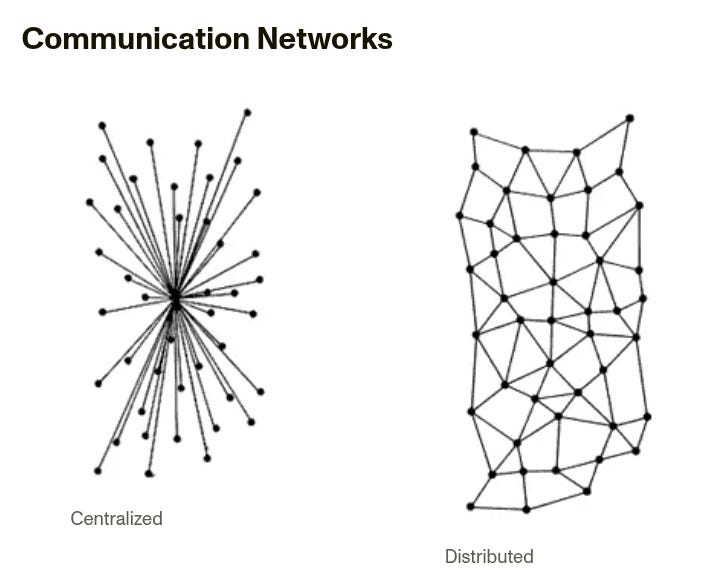
The main issue was most of the centralized switching facilities would be destroyed in the attack. Think of these facilities as a bridge that allows communication.
In 1964 Paul Baran, a researcher for RAND Corporation, was standardizing a technique for machines to communicate through ARPANET in a manner that can survive a nuclear attack. The key insight was that there should be no centralized switches and could operate even if many links and switching nodes were ruined. standardized network packet switching.
This is a concept now called distributed communication. Baran also invented the concept of packet network switching: the idea that information should be split into fragments. Each fragment would be first be stored by a machine on the network. The machine would then calculate the most efficient route to the destination machine and then forward the packet as such.
In 1969 Baran’s distributed communication network was tested at UCLA. At first researchers treated it as an academic research project where they shared computers remotely—indeed an implementation of the timesharing system that researchers like JCR Licklider envisioned.
Thankfully by 1971 it evolved into a messaging system. Against everyone’s expectations people increasingly relied on computer networks to sending all kinds of information.
In 1983 the US made the decision to split the network into two: MILNET for use by the US Military and ARPANET.10
University Experiments Birth Modern Internet Technology
By the late 20th century American universities already earned a reputation for their indispensable role in birthing modern computer technology—going as far back as the ENIAC machine. Several other computer networks were formed—the most important being USENET by AT&T and the later NSFNET in 1985. USENET made UNIX a standard for microcomputers and helped make the C programming language. Today GNU/Linux continues to be an operating system used by developers. By 1985, the National Science Foundation launched NSFNET to allow academic researchers to communicate their ideas.
NSFNET: The Backbone of the Modern Internet
NSFNET linked computers owned by researchers and educators at universities in the United States. In 1985 Dennis Jennings made the decision to standardize the Transmission Control Protocol and Internet Protocols. Steve Wolff realized that NSFNET had to allow for the tranmission of academic research and that the Wide Area Network had to be free from federal funding. Wolff’s insight that the US needed quick exchange of academic research most definitely played a crucial role in advancing US technology.
To support Wolff’s insight I will share that by mid-1987 researchers used the network so frequently that it became congested—unable to serve everyone’s needs.
The National Science Foundation encouraged regional networks to convince the layman to subscribe to Internet service. The economics of scale would lower Internet costs for everyone.11 In a future blog post I will explain how the economics of scale works in detail.
IBM and MCI Help Build the Modern Internet
Both IBM and MCI invested their own employees and technical expertise to improve the throughput of NSFNET. Both companies wanted to earn a reputation for building NSFNET knowing this will help them win customers over at institutions to build and maintain their computer networks.
IBM helped NSFNET develop affordable hardware/software compatible with TCP/IP — the networking standards Dennis Jennings made official in 1985. Before TCP/IP IBM used their own proprietary protocol for network communication. But when IBM realized NSFNET made the decision to standardize TCP/IP they knew they were missing on a big commercial opportunity: IBM machines at the time would be unable to interconnect IBM machines on university campuses and get reasonable performance without being TCP/IP compliant. By 1986 with IBM’s help most university campuses ran computer networks operating on TCP/IP. MCI developed high-speed networking cables to transmit data quickly—ensuring NSFNET was reliable and no one was left hung up from network congestion.
The Birth of Silicon Valley
By the 1990s NSFNET was reliable enough to allow for nationwide e-commerce. In the next blog post I will explain the rise of Silicon Valley.
Hans M. Kristensen & Robert S. Norris (2013) Global nuclear weapons inventories, 1945–2013, Bulletin of the Atomic Scientists, 69:5, 75-81, DOI: 10.1177/0096340213501363
Weinberger, Sharon. The Imagineers of War: The Untold Story of DARPA, the Pentagon Agency That Changed the World. Knopf, 2017.
Weinberger, Sharon. The Imagineers of War: The Untold Story of DARPA, the Pentagon Agency That Changed the World. Knopf, 2017.
Weinberger, Sharon. The Imagineers of War: The Untold Story of DARPA, the Pentagon Agency That Changed the World. Knopf, 2017.
Weinberger, Sharon. The Imagineers of War: The Untold Story of DARPA, the Pentagon Agency That Changed the World. Knopf, 2017.
Weinberger, Sharon. The Imagineers of War: The Untold Story of DARPA, the Pentagon Agency That Changed the World. Knopf, 2017.
Weinberger, Sharon. The Imagineers of War: The Untold Story of DARPA, the Pentagon Agency That Changed the World. Knopf, 2017.
Weinberger, Sharon. The Imagineers of War: The Untold Story of DARPA, the Pentagon Agency That Changed the World. Knopf, 2017.
Weinberger, Sharon. The Imagineers of War: The Untold Story of DARPA, the Pentagon Agency That Changed the World. Knopf, 2017.
“Paul Baran and the Origins of the Internet.” RAND Corporation, 2018, www.rand.org/pubs/articles/2018/paul-baran-and-the-origins-of-the-internet.html.
National Science Foundation. NSFNET: A Partnership for High-Speed Networking (Final Report, 1987–1995). NSF, 1995.