
US Population Growth Fuels Demand for Computers
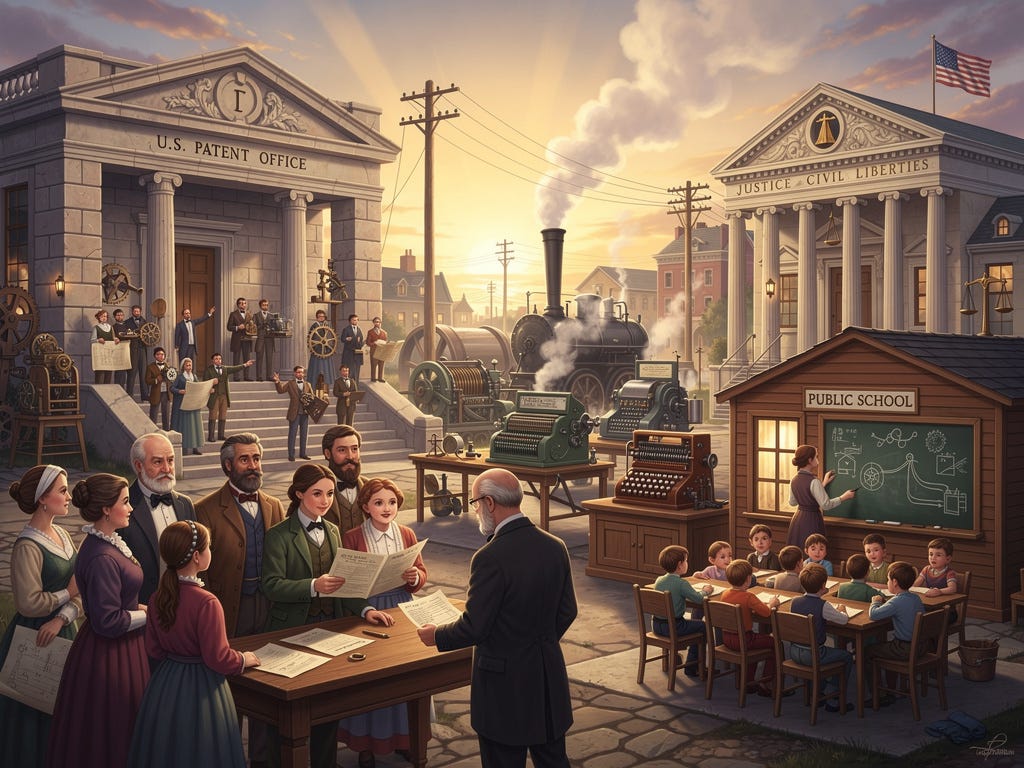
Cybersecurity professionals should be aware of what motivates people, businesses, and nation-states to invest in technology to manage our lives. Without this knowledge, a cybersecurity professional will not understand how people’s motivations to use technology affect how cybersecurity issues are addressed.
Throughout this blog series, I will first explain why countries like the United States invest in technology. I will next explain how people’s motivations to invest in technology have led to an ever-increasing investment in cybersecurity.
As early as the late nineteenth century, the US Federal Government sponsored the development of computer machines to help the government manage itself. By the 1880s, the US population rose so rapidly that the US Government hosted a competition to develop a machine to help the US perform the 1890 Census. An important question is what cause this sharp rise in population. There were a number of reasons for this: both political and economic.
America Opens to Immigrants: A Policy
After the Alien and Sedition Acts expired with the beginning of Thomas Jefferson’s presidency, America welcomed European immigrants.1
Most European immigrants fled their home countries—tired of lack of economic opportunity in their homeland. By 1800 CE, most European countries adopted feudal systems where wealth was distributed based on inheritance, religious affiliation, or royal ancestry.2
America’s founders were frustrated by unequal wealth distribution seen in European countries and believed a person should be rewarded based on merit and not one’s hereditary, religious, nor even royal authority—hoping it would grow the US population, help pay US debts, and satisfy worker demands.3
Thomas Jefferson argued the importance of allowing immigrants arriving to the US. James Madison argued the importance of ensuring no one had absolute authority over them—insisting noncitizens still had certain rights protected by the US Constitution (Madison was one of the authors of the US Constitution). Still, to prevent foreign interests from conflicting with US interests the Naturalization Law of 1802 extended citizenship to all white citizens “of good moral character” as long as they lived in the US for more than five years and declared their desire to be naturalized at least 3 years before doing so.4
Because of the efforts of US Founders the US became a common destination for immigrants. Many of these were religious and political minorities in Eurasia.
With the passing of the Naturalization Law of 1802 America became open to immigration. Beginning from 1830 European immigrants arrived often to escape poverty and for their own safety from violent European political revolutions.5
President Abraham Lincoln further improved immigration to the US by signing two bills: The Homestead Act of 1862 and The Contract Labor Act of 1864. The Homestead Act of 1862 offered land grants to both US citizens and immigrants that were eligible for naturalization. The Contract Labor Act allowed employers to hire foreign workers, pay their transportation costs, and contract their labor. Corrupt rulers, high taxes, and a lack of land all drove German emigrants to migrate to America. German emigrants to the US wrote about their positive experiences in America. One of the most important works—Report on a Journey to the Western States of North America and a Stay of Several Years Along the Missouri (During the Years 1824–1827)—convinced Germans to migrate to US states such as Missouri 67
Lincoln also helped Chinese citizens emigrate to the US by appointing Anson Burlingame as the US Minister of China in 1861. Burlingame convinced the Chinese Government to allow Chinese citizens to emigrate to the US under the Burlingame-Seward Treaty.8 This was a great benefit to Chinese citizens since it was previously illegal in China. Although the treaty did not guarantee a Chinese-American immigrant the right to naturalization—millions of Chinese emigrated in response—boosting the US population by 14.4% as the Founders of America wanted.9 It took until 1898 for the federal government to allow Chinese immigrants to have birthright citizenship after the United States vs Wong Kim Ark trial.10
By 1890 the foreign-born US population was 14.8%. Many migrants decided to work for a period of time before returning to their home country.11
As we can see in the chart below the US population rose more rapidly than any other nation from 1800 - 1900 CE12:
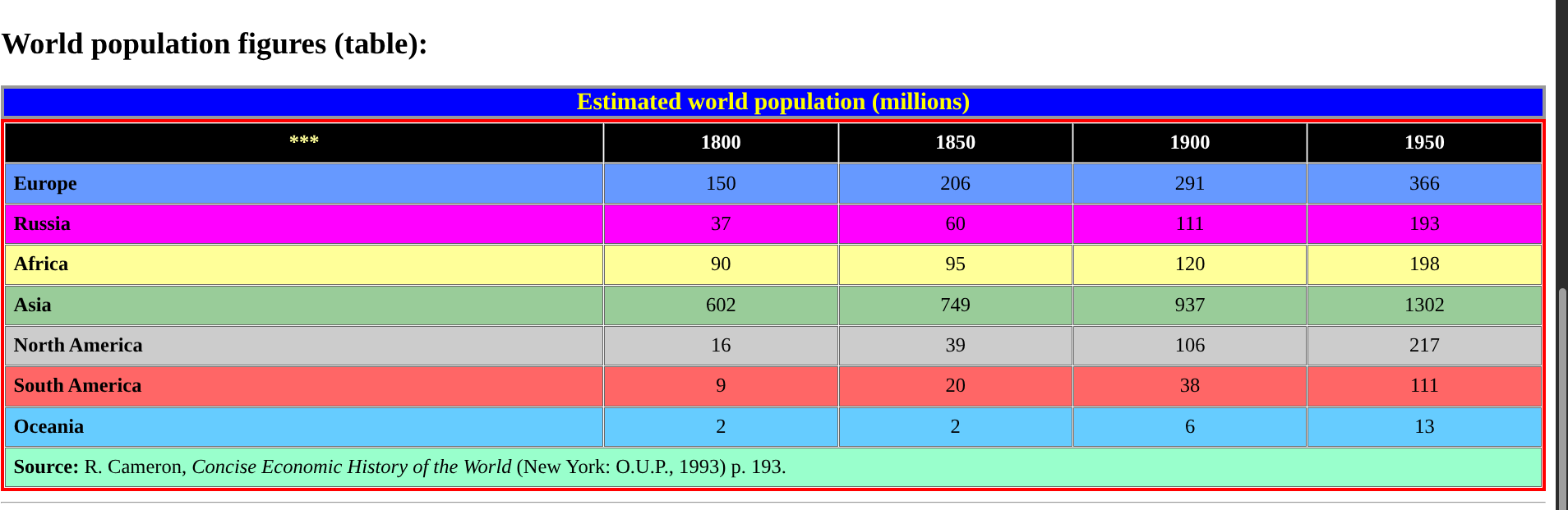
Still, immigration alone cannot explain the standardization of computer technology in the US. It took place in the US but South American countries lagged. To understand why I would like to cite important insights offered by Acemoglu and Robinson in their book “Why Nations Fail” and “Capital” by Thomas Piketty.
Technical Innovation Amongst Countries
I have given evidence that immigration rose rapidly in the United States in search of better standards of living.1314 Immigrants rushed to the US since employers offered better wages than what immigrants would receive at their birthplace.15
There were several important events in the nineteenth century that compelled the US Federal Government to adopt computer technology by the end of the 19th century16:
The US Constitution recognized the importance of private property rights. The US Homestead Act that President Abraham Lincoln signed encouraged immigrants to settle to the United States to claim ownership of fresh land as private property. Moreso however American born on US soil spread to lands in the Midwest and West. The US Homestead Act did not require citizenship to claim land—and US railroad companies advertised the sale of land grants in Europe to attract settlers. The US Federal Government and railroad companies reasoned this would attract immigrants to the US—who would work on the newly settled land and allow railroad companies to transport valuable goods for sale. This led to the rapid rise of the US population—mostly from immigration. This improved farming efficiency in the US. It took less farmers to produce more agricultural surplus. Now that there was more food available and less need for labor people could spend time doing extra beneficical tasks that an agragarian lifestyle would not have given them. This is why businesses profited from technological innovation in the US—especially in the North. The North would later win the US Civil War and require the South to adopt some of their customs afterwards—including access to public education and increased civil rights for people of all races.1718
An accessible US Patent System—which granted affordable patents to an inventor regardless of their background—even to non-US citizens. In 2012 intellectual capital makes up 55% of US GDP. Intellectual capital makes up to 80% of market value of all public companies in the US.19
Patents grant inventors the exclusive right to profit from their invention for a fixed period of time. After the patent expires anyone is welcome to profit off the invention as they can. This was unique to the US Patent System—it did not discriminate based on one’s social class, wealth, or even citizenship.20
Patents in the US were less expensive than other countries and it thus made business sense for inventors and businessman to found their companies in the United States. The US Patent System was unique in that it allowed anyone regardless of status—even without US citizenship—to file a patent. The selling point of having a patent was the exclusive right to profit off an invention idea. Let’s say you are a person that does not have the resources to build the invention on our own. Such a person can first file a patent and then license the patent invention to another company that would, in turn, build the product and sell it. The inventor receives royalties for inventing the idea—a win-win for both. This concept gave non-wealthy, non-elite citizens a strong incentive to invent technology to benefit American society. Even rich businessman such as Thomas Edison sold patent licenses to others to profit from royalties this way. 2122
Important inventors such as Samuel F.B. Morse (inventor of telegraph), Alexander Graham Bell (founder of AT&T), Cornelius Vanderbilt (improved efficiency of railroads and therefore transportation in the US), Andrew Carnegie (founder of Bethlehem Steel), John D Rockefeller (founder of Standard Oil), Henry Ford (standardized assembly line and made automobile transportation affordable), and Thomas Edison (founder of modern General Electric) all benefited from the accessible US Patent System. All of these inventors except Bell and Morse were not from wealthy families. Alexander Graham Bell was the only immigrant in this list to be awarded a US patent for his invention of the telephone—yet Bell was not a US citizen when he was awarded the patent in 1876! Bell was granted US citizenship much later in 1882.2324 All these inventors increased spread of information (a critical part of protecting freedom of speech and boosting commerce), job options for American citizens, and electronic commerce—the beginning of the Global Information Age.
The Information Age continued in the twentieth century as the US struggled against Russia during the Cold War for military and economic dominance. During this century the US found DARPA under President Dwight D. Eisenhower—the military program that birthed the Internet with the assistance of Stanford University and UCLA to protect the US against potential nuclear threats. The US Government also funded several military contracts in the 20th century that led to the rise of Silicon Valley—a well-funded area for tech companies. Several “Big Tech” companies including Intel, Microsoft, Apple, Google, OpenAI, and Anthropic were all founded in Silicon Valley—and the US Federal Government either directly or indirectly made all happen through the US Patent System and US Federal Government contracts.2526
The US Patent Act of 1870 allowed non-US citizens to file for US patents.27 All of the factors mentioned above made the United States one of the most attractive places for technical innovation in the world—and it still is to this day. The US Patent System was unique in that it awarded ideas based on merit—not one’s status. No other major country in the world in the nineteenth century was this open to patent grants.
US President Abraham Lincoln 28 signed the Morrill Act of 1862. This act required the US Federal Government to grant land to states to build public universities. Several important universities including Cornell University and the University of California system continue to exist because of this critical land grant. These universities train highly skilled workers to work for companies that powered the US economy—a fact that remains true to this day.29
Unlike other countries US banks could not simply buy their way to power. The US Federal Government system was designed to only allow people to stay in office after each election for very short periods of time—including the US President. Frequent elections prevented banks from sponsoring politicians that would grant them monopoly banking power—as such politicians would often be rejected from office after doing so the first time (Andrew Jackson is a notable exception—who adopted the spoils system)30 Without the existence of serious banking monopolies in the nineteenth century there were tens of thousands of banks scattered throughout the US forced to charge low interest rates for loans due to fierce, nearby competition. This made it easier for businesses to risk taking loans to start a business—arguably easier than in any other nation.31
The United States is unique in its endorsement in allowing freedom of speech—even allowing public speech deemed morally offensive—including speech promoting racial or ethnic superiority to control others (unless it involves violence or false alarm). There were cases where this was undermined such as during the US Civil War (muting speech in favor of slavery) and World War II (muting antisemitism to promote US propaganda in favor of supporting Allied Powers). Still, moreso than not the US protects even “hateful” and offensive” speech in public. No other nation in the United States allows freedom of speech to such a degree in their modern Constitutions. Freedom of the press promoted economic growth and resisted monopolies. For example telegraph companies including Western Union used to set unreasonably high prices for sending data through their telegraph service. Public dissatisfaction with these prices as seen in the press led to the passing of acts such as The Communications Act of 1934—granting the Federal Communications Commission the power to regulate pricing of telecommunications. A second case study is the collective criticism of monopolies in the Progressive Era by critical journalists (coined “muckrackers”) during Theodore Roosevelt’s presidency.32 The muckrackers convinced the US Federal Government to pass bills such as The Sherman Antitrust Act to break up monopolies that have proven to stifle economic growth through ruthless deletion of competition.33
The five above key reasons support the thesis of “Why Nations Fail”: the design and practice of political institutions determine the success of economic institutions in a nation. No other nation other than the US optimized the recognition of innovative ideas based on merit—not prejudice. The design and execution of US Federal and State Governments allowed this to take place.
By the late 1880s the political situation in the US not only caused a sharp rise in the population. It also led to the sharpest rise in social mobility and complexity as technical innovation and the federal funding of US public colleges allowed for narrow specializations of labor.3435 By the 1880s the combined problem of accounting for a rapidly rising, diverse population and increasingly complex jobs from tech innovation compelled the US to host a national competition to build a US Census Machine.3637 The winner of this national competition was Herman Hollerith—who would co-found International Business of Machines (IBM) with Thomas J Watson.3839
IBM Began the Global Computing Revolution
Hollerith’s machine was so successful in helping complete the US Census that other nations in Eurasia adopted his technology to help complete theirs.40 Hollerith’s machine set the standard of using Gottfried Leibnitz’s binary numeral system to perform calculations. To this day all computer machines around the world execute code using the binary numeral system.41
Hollerith’s punched-card system to write programs was inspired by the punch-card system used by railroad conductors to record traveler details. IBM improved Hollerith’s technology. Aside from the US Census the US Federal Government used IBM punched-card machines in Social Security Administration.42. Businesses around the world quickly struck business deals with IBM or were inspired by IBM’s “Tabulating Machine Technology” to save money and time with tedious tasks—from helping police manage criminal records to helping libraries keep track of borrowed books.43
Indeed the US Government Accounting Office (G.A.O) attests it would be impractical for the US Federal Government to serve the rapidly rising US population—which skyrocketed from about 80 million in 1900 CE to over 280 million by 1980 CE.44 Without computing technology the US Federal Government would have fallen short of its federal duties—and the US G.A.O points out Presidential actions such as Franklin D. Roosevelt’s New Deal and Harry S. Truman’s approval of the US Atomic Energy programs greatly expanded the US Federal Government’s civic duties in the 20th century—making completing tasks and record-keeping ever-more complicated against an ever-expanding population.45
In the next article I will explain how the US persisted its leadership in technical innovation in the twentieth century during the US Cold War despite major changes in society—including the rise in costs and complexities of Patent and Copyright Laws to the development of Silicon Valley and Big Techs.
National Constitution Center. “The Alien and Sedition Acts (1798)”. Constitution Center, www.constitutioncenter.org/the-constitution/historic-document-library/detail/the-alien-and-sedition-acts-1798.
Kotkin, Joel. “America’s Drift toward Feudalism.” *American Affairs Journal*, 20 Nov. 2019, [americanaffairsjournal.org/2019/11/americas-drift-toward-feudalism/](https://americanaffairsjournal.org/2019/11/americas-drift-toward-feudalism/).
Cato Institute. “A Brief History of U.S. Immigration Policy from the Colonial Period to the Present Day.” *Cato Institute*, 2021, [www.cato.org/policy-analysis/brief-history-us-immigration-policy-colonial-period-present-day](https://www.cato.org/policy-analysis/brief-history-us-immigration-policy-colonial-period-present-day#voluntary-forced-migration).
Cato Institute. “A Brief History of U.S. Immigration Policy from the Colonial Period to the Present Day.” *Cato Institute*, 2021, [www.cato.org/policy-analysis/brief-history-us-immigration-policy-colonial-period-present-day](https://www.cato.org/policy-analysis/brief-history-us-immigration-policy-colonial-period-present-day#voluntary-forced-migration).
U.S. Department of Homeland Security, Office of Immigration Statistics. Yearbook of Immigration Statistics: 2018. DHS, 2019.
Burnett, Robyn and Ken Luebbering. German Settlement in Missouri: New Land, Old Ways. University of Missouri Press (1996), 6-7.
Parrish, William Earl et. al. A History of Missouri: 1820-1860. University of Missouri Press (2000), 38-39.
United States. Burlingame-Seward Treaty: Peace, Amity, and Commerce, U.S.-China. 28 July 1868, 16 Stat. 739, T.S. 48.
United States, Bureau of the Census. “Table 1. Nativity of the Population and Place of Birth of the Native Population: 1850 to 1990.” Historical Statistics of the United States: Colonial Times to 1970, U.S. Government Printing Office, 1975.
Spickard, Paul. Almost All Aliens: Immigration, Race, and Colonialism in American History and Identity. Routledge, 2007, p. 470.
United States, Bureau of the Census. “Table 1. Nativity of the Population and Place of Birth of the Native Population: 1850 to 1990.” Historical Statistics of the United States: Colonial Times to 1970, U.S. Government Printing Office, 1975.
“Estimated World Population, 1800 - 1950.” University of Botswana History Department, 27 Aug. 2000, https://www.thuto.org/ubh/ub/h202/wpop1.htm.
Kotkin, Joel. “America’s Drift toward Feudalism.” *American Affairs Journal*, 20 Nov. 2019, [americanaffairsjournal.org/2019/11/americas-drift-toward-feudalism/](https://americanaffairsjournal.org/2019/11/americas-drift-toward-feudalism/).
“The Rise of Industrial America, 1877-1900.” Gilder Lehrman Institute of American History, www.gilderlehrman.org/history-resources/essays/rise-industrial-america-1877-1900.
Piketty, Thomas. Capital in the Twenty-First Century. Translated by Arthur Goldhammer, Belknap Press of Harvard University Press, 2014.
“The Rise of Industrial America, 1877-1900.” Gilder Lehrman Institute of American History, www.gilderlehrman.org/history-resources/essays/rise-industrial-america-1877-1900.
“The Rise of Industrial America, 1877-1900.” Gilder Lehrman Institute of American History, www.gilderlehrman.org/history-resources/essays/rise-industrial-america-1877-1900.
“Estimated World Population, 1800 - 1950.” University of Botswana History Department, 27 Aug. 2000, https://www.thuto.org/ubh/ub/h202/wpop1.htm.
“America’s Uniquely Democratic Patent System.” Introduction to Intellectual Property, OpenStax, 22 Feb. 2021, openstax.org/books/introduction-intellectual-property/pages/1-3-americas-uniquely-democratic-patent-system.
Acemoglu, Daron, and James A. Robinson. Why Nations Fail: The Origins of Power, Prosperity, and Poverty. New York: Crown, 2012. Print.
These systems like the Patent System—they failed to resist perversion overtime. Nowadays the Patent System is ridiculously expensive. Why is that? You need a feedback system to keep this in check — Dennis Groves
OpenStax. “America’s Uniquely Democratic Patent System.” Introduction to Intellectual Property, 2021, openstax.org/books/introduction-intellectual-property/pages/1-3-americas-uniquely-democratic-patent-system.
10 Things You May Not Know About Alexander Graham Bell.” History.com, A&E Television Networks, 28 May 2025, www.history.com/articles/10-things-you-may-not-know-about-alexander-graham-bell.
Bell, Alexander Graham. Improvement in Telegraphy. U.S. Patent 174,465, filed 14 Feb. 1876, and issued 7 Mar. 1876.
O’Mara, Margaret. The Code: Silicon Valley and the Remaking of America. Penguin Press, 2019.
Weinberger, Sharon. The Imagineers of War: The Untold Story of DARPA, the Pentagon Agency That Changed the World. Knopf, 2017.
Reilly, Gregory. “Our 19th Century Patent System.” Indiana University Maurer School of Law, 2016, www.repository.law.indiana.edu/cgi/viewcontent.cgi?article=1044&context=ipt.
US President Abraham Lincoln is responsible for facilitating civil rights for all races through the 13th, 14, and 15th Amendments, for making private property accessible to the public through the Homestead Act, and for making high-quality education accessible to the public through the Morill Act. Abraham Lincoln strongly believed these were natural rights that all human beings should benefit from—and his actions continue to benefit the US economy to this day—earning his recognition as the one of the most respected US presidents.
United States, Congress, Congressional Research Service. R45897. 2024, www.congress.gov/crs-product/R45897.
Acemoglu, Daron, and James A. Robinson. Why Nations Fail: The Origins of Power, Prosperity, and Poverty. New York: Crown, 2012. Print.
Acemoglu, Daron, and James A. Robinson. Why Nations Fail: The Origins of Power, Prosperity, and Poverty. New York: Crown, 2012. Print.
“Back: 1830-1860.” Imagining Elon: Time Capsule, Elon University, www.elon.edu/u/imagining/time-capsule/150-years/back-1830-1860/.
Goodwin, Doris Kearns. The Bully Pulpit: Theodore Roosevelt, William Howard Taft, and the Golden Age of Journalism. Simon & Schuster, 2013.
"The U.S. Census Tradition." Population Reference Bureau, www.prb.org/resource/the-u-s-census-tradition/.
"1880 Decennial Census Publications." U.S. Census Bureau, www.census.gov/programs-surveys/decennial-census/decade/decennial-publications.1880.html.
Computers in Government: We Couldn’t Do Without Them. U.S. Government Accountability Office, 1 June 1980, www.gao.gov/products/112745.
Computers in Government: We Couldn’t Do Without Them. U.S. Government Accountability Office, 1 June 1980, www.gao.gov/products/112745.
“The Origins of IBM.” IBM, www.ibm.com/history/ctr-and-ibm.
Computers in Government: We Couldn’t Do Without Them. U.S. Government Accountability Office, 1 June 1980, www.gao.gov/products/112745.
"The Punched Card Tabulator." IBM, www.ibm.com/history/punched-card-tabulator.
“The Punched Card Tabulator.” IBM, www.ibm.com/history/punched-card-tabulator.
“The Punched Card Tabulator.” IBM, www.ibm.com/history/punched-card-tabulator.
“The Punched Card Tabulator.” IBM, www.ibm.com/history/punched-card-tabulator.
Computers in Government: We Couldn’t Do Without Them. U.S. Government Accountability Office, 1 June 1980, www.gao.gov/products/112745.
Computers in Government: We Couldn’t Do Without Them. U.S. Government Accountability Office, 1 June 1980, www.gao.gov/products/112745.