
Today when you ask someone about their views on privacy you will often hear them say something like “I don’t need privacy since I have nothing to hide”. Assuming said person is not a criminal at face-value this defense against concern for privacy seems to make sense.
However US law professor Daniel J Solove, author of Nothing to Hide: The False Tradeoff between Privacy and Security disagrees. In his detailed defense of our need for privacy despite our innocence from crime. Solove points out in his book that most refutations focus on bad or embarassing things people want to hide. For example we don’t want our coworkers to know about our personal lives, our private business interests, our family feuds, or even where we hang out outside of work.
Solove in his book points out what people often get wrong about privacy: it is not about protecting wrongdoers. He argues in the real world the real cost of loss of privacy is a lack of responsibility and total abuse of power. And there are several methods governments and companies have abused to do this: aggregation and exclusion.
In aggregation small bits of seemingly harmless data are collected piece-by-piece. Yet when strung together can reveal much more information than the victim intended. For instance let’s say you bought a book on cancer from Amazon. A few days later you buy a wig. From these two purchases one can infer you are undergoing chemotherapy! Often people that are treated with chemotherapy face hair loss during treatment. We learn from experience we don’t want our coworkers to know our health problems lest they lay us off!

The second problem is exclusion. In exclusion people are prevented from knowing how information collected about them is being used. Many governments around the world keep national databases of their citizens—collecting information about their own citizens without their consent. And the citizens have no say on how this information is collected. The issue with that is this will get in the way of fair due process in courts and more. Consider another case: we have little control over how companies share our data with each other outside of a toggling a few web buttons. There are privacy policies but as author Shoshana Zuboff admits every company occasionally breaks their own privacy policy to debug their own infrastructure.
Author Micheal W Lucas, an IT administrator turned self-publishing author, admits in his work that he at one point in his career had to read the personal corporate document of a customer. He tried his best to avoid remembering the information. Still the memories of him having to sift through the personal documents of customers during company troubleshooting drove him to launch his own self-hosted mail server (not recommended for tech-newbies use Tuta instead).

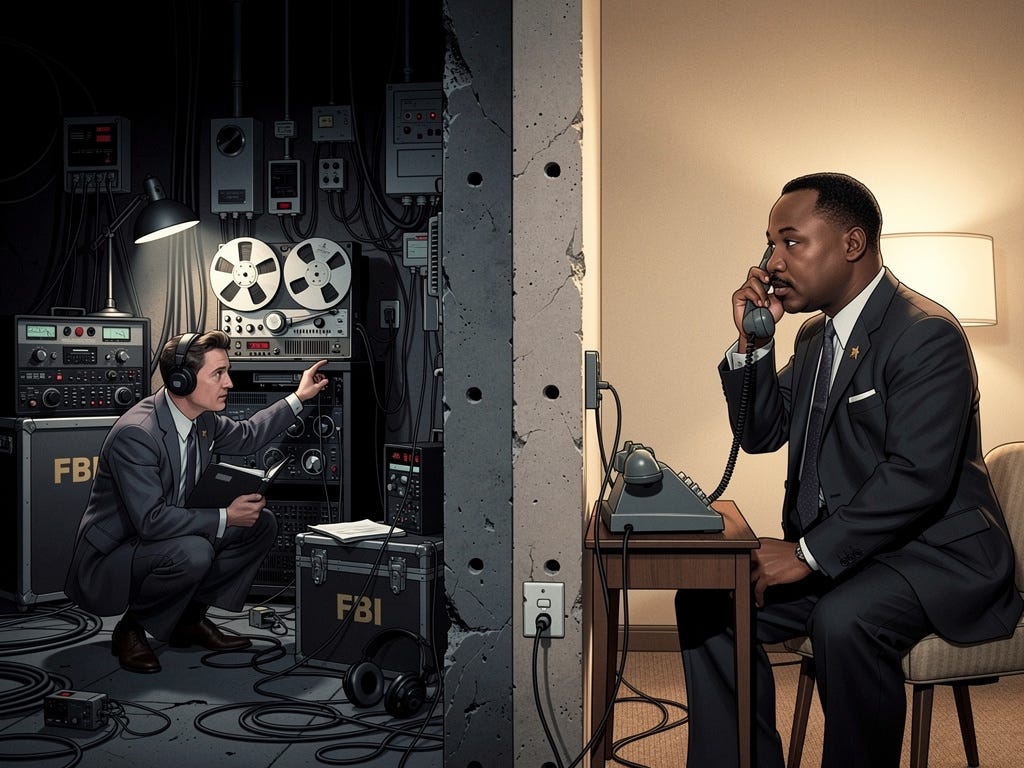
A third problem is secondary use: the exploitation of data originally collected for one purpose abused for another purpose without the subject’s consent. The following is a true story. During the US Civil Rights Movement the FBI wiretapped the communications of several US Civil Rights activists for their Communist ties. Martin Luther King Jr was one of them. Although the FBI was supposed to wiretap King’s conversations to use it against him in trial to convict him of potential Communist ties the FBI did something even nastier. They found out King was having an affair. So they sent a letter to King’s wife threatening to publicly release the details to the public if King did not kill himself (page 23 of Solove’s “Nothing to Hide”). This is the sort of blackmail J. Edgar Hoover did on others (including US Presidents). And horribly this is why people had trouble standing up to Hoover.
A fourth problem with lack of privacy in data collection is distortion. We all have experience being exposed to lies, deceit, and manipulation. When information about ourselves are collected only specific sides to the story can be presented—painting a misleading photo of a person. As a form of propaganda, politicians, artists, and the press have committed the sin of distortion since antiquity.
One of the worst cases of this is the 2003 Iraq WMD Intelligence Scandal. During the Iraq War US Intelligence cherry-picked information in favor of its political position: that Iraq was making weapons of “mass destruction”. US Intelligence even censored dissenting evidence from the United Nations. By deliberately showing only one side of evidence US Intelligence set up a show that made it look like Iraq had weapons of mass destruction.1 Imagine all the needless private information they gathered only to essentially fool the public.
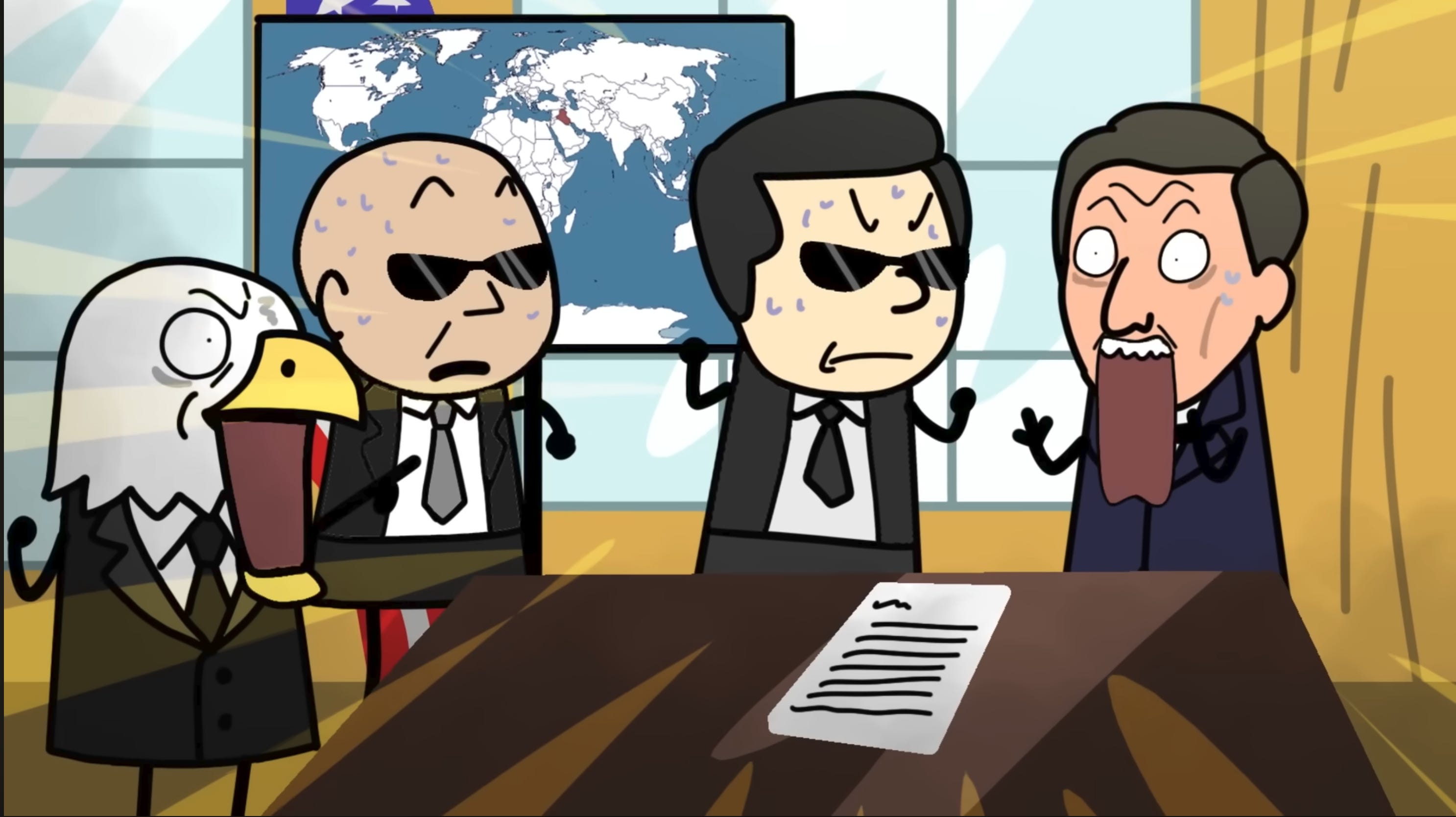
This incident should make clear the true danger of distortion: getting innocent people hurt all for nothing. Secret police services working for corrupt governments like the Soviet Union were infamous for doing this. The mastermind behind the KGB, Russian secret police, once even said: “Show me the data and I will show you the crime”.2
The next fallacy we often hear is the all-or-nothing fallacy.
The All-or-Nothing Fallacy
The fallacy goes with this: I will give up my privacy if it will keep me safe.
To the NSA, which hid its activities from Congress until investigative journalist James Bamford revealed its inner workings to the public, this is a necessary trade-off. The NSA conducts surveillance activities on its own citizens daily. However Solove gives a strong refutation to the idea that forfeiting privacy is necessary for security.
Rarely does judicial oversight or the application of the Fourth Amendment prohibit a government surveillance activity — Daniel J Solove from “Nothing to Hide: The False Tradeoff betwen Privacy and Security”
Solove argues instead that judicial oversight allows government surveillance to be subject to oversight and sometimes a degree of limitation.
That’s how most constitutional and statutory protections work. Even the Fourth Amendment. As long as the government can somehow convince justices that an invasive search is necessary it can be done! A search on your home. Your computer. Your body after death. Literally anything as long as no judge stops them. This is a dark contrast to how justices stopped Robinson during the Polly Affair. Had it not been for them Robinson would have gotten away with ransacking homes and their quarters—even claiming lives with him with his militia.
Following the Fourth Amendment’s example surveillance laws restricts the act of surveillance by requiring judicial supervision. Law enforcement officials are required to report their surveillance activities to court to prevent surveillance abuses.
Too often polls asking US citizens about surveillance fail to account for warrants, court orders, and the other judicial aspects that are supposed to restrict surveillance. For example the following is a poll question from 2002 conducted by Pew Research Center:
Should the government be allowed to read emails and listen to phone calls to fight terrorism?
Below is yet another poll from 2005 from Ramussen Reports:
Should the National Security Agency be allowed to intercept telephone conversations between terrorism suspects in other countries and people living in the United States?
Too few Americans are educated on the cruciality of judicial oversight and regulation to avoid abuses of surveillance. According to Solove in most cases judicial oversight and regulation do not diminish a security measure that much. Yet this balance is rarely reviewed by the public probably due to ignorance. Instead the public thinks massive tradeoffs between protecting privacy and security must take place.
Up Next: Investigative Journalism Raises Awareness of Secret Surveillance
In the next article I will demonstrate how the investigative journalism work of people from the work of activiststo Edward Snowden has increased public sensitivity to government surveillance—leading up to the mass exodus from OpenAI to Claude.
Commission on the Intelligence Capabilities of the United States Regarding Weapons of Mass Destruction (Robb-Silberman Report), Report to the President of the United States (Washington, DC: U.S. Government Printing Office, March 31, 2005), https://georgewbush-whitehouse.archives.gov/wmd/.
Schneier, Bruce. Data and Goliath: The Hidden Battles to Collect Your Data and Control Your World. W. W. Norton & Company, 2015.