
Did you know the US Fourth Amendment was inspired by unreasonable search and seizures that took place in the decades before the US Revolution? Yet the Federalists that wrote the Amendment had hidden political agendas in its publication. How effective was the Fourth Amendment at protecting our home privacy against intrusion? Read on to find out what they were!
This article uses William J Cuddihy’s excellent historical reference titled The Fourth Amendment: Origins and Original Meaning 602-1791. This excellent reference was recommended by Daniel J. Solove. He is John Marshall Harlan Research Professor of Law, George Washington University Law School.
Solove points out this historical reference is used by US Supreme Court to review interpretations of the Fourth Amendment. For this reason Solove concludes it is indispensable to understand the origins of the US Fourth Amendment.
For those of you that have a university library account I strongly urge you to use that to purchase the book either at a discount or ideally for free as I did myself. Otherwise the Amazon affiliate link is the only other way to acquire the text.
For my readers here that are privacy advocates the Fourth Amendment must hold dear to them. Below is transcript of the Fourth Amendment:
Amendment IV
The right of the people to be secure in their persons, houses, papers, and effects, against unreasonable searches and seizures, shall not be violated, and no warrants shall issue, but upon probable cause, supported by oath or affirmation, and particularly describing the place to be searched, and the persons or things to be seized.
At face value we see the text protects people from home invasions and property theft unless there is “probable cause”—which is today enforced through a search warrant.
The history of the Fourth Amendment is built on a long history of home intrusions and property theft that took place in Great Britain. A century and a half before the US Fourth Amendment was written Great Britain passed laws preventing general search warrants. These gave the British Government the right to invade anyone’s home at will. The British government would have to struggle to get judges to approve of a search warrant targeting a specific house. These laws were passed in Great Britain by the 1500s after hundreds of unpopular general warrants allowed the government to invade the homes and privacy of citizens.
Although Great Britain developed strong protections against general search warrants no such protections existed in the US colonies before the US Revolutionary War. Unsurprisingly several scandals took place that US Supreme Court still researches when reviewing court cases involving the Fourth Amendment.
In this article I will explore the history behind the Fourth Amendments ratification. Throughout the remainder of this article I will give the brief, relevant history from Cuddihy’s work that leads up to the moment the Fourth Amendment was ratified and how effective it was against home intrusions.
Relevant Legal Scholars on Search and Seizure
Sir Edward Coke
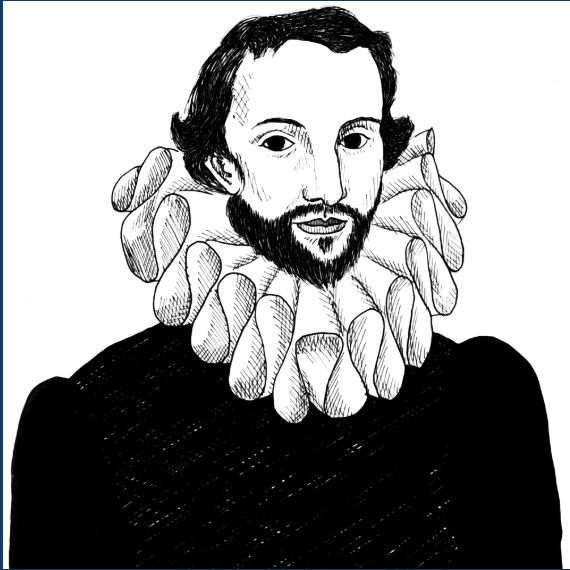
Sir Edward Coke was the earliest of the legal scholars cited by the US colonists to defend the right of a person’s home privacy even if it meant resorting to violence in extreme cases. Many colonists were familiar with the famous phrase “A man’s house is his castle” often attributed to legal scholars such as Coke. Coke explains the civil rights a person has over his home against thieves of any kind. To Coke and the colonists that even meant the government1:
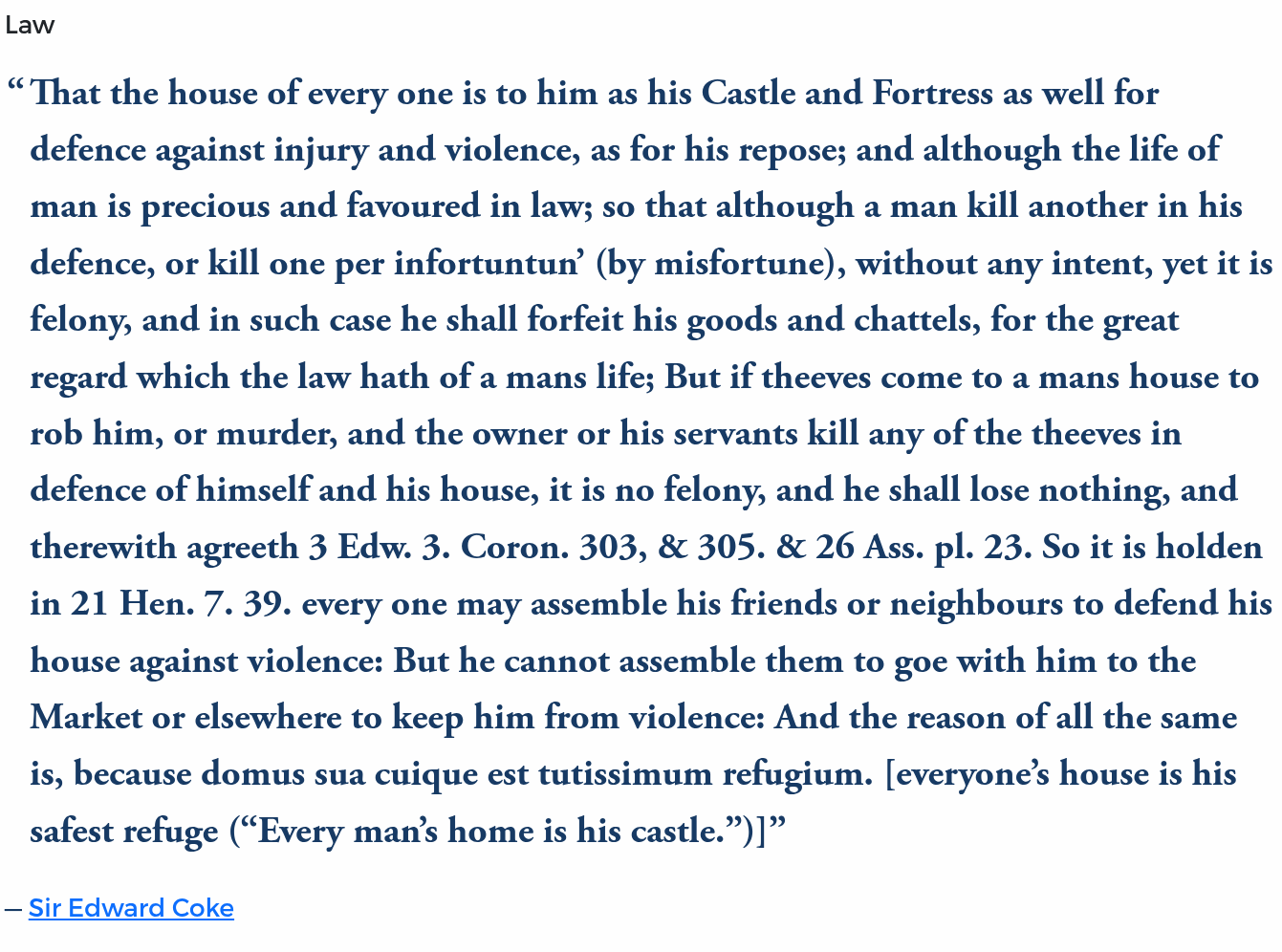
In the decades before the American revolution several people acted on Coke’s principles best captured in the above quote including Founders like John Adams. I will later show you who they were.
Sir William Blackstone
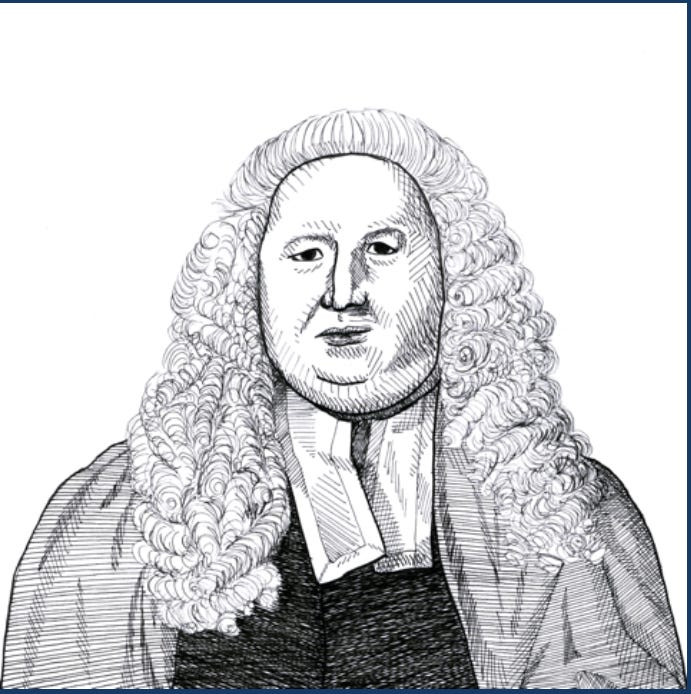
Sir William Blackstone was an outstanding legal scholar who wrote a highly influential commentary series titled Commentaries on the Laws of England. This reference is reviewed by US Supreme Court whenever discussions on historical interpretations of the law emerge. It has been read by Founders of the United States including John Adams and Thomas Jefferson. US President Abraham Lincoln also read this reference in his self-education.
In his commentary Blackstone defined “eavesdropping” as the act of listening “under walls or windows, or the eaves of the house, to hearken after discourse (eavesdrop after participating in a face-to-face conversation), and thereupon to frame slanderous and mischievous lies”2
Both of these critical legal scholars’ works were heavily studied by colonists in the decades before the US Revolution as the British Empire gave out general warrants against colonists. What were those general warrants issued for and why did colonists fight back?
Excessive Taxes Lead to Smuggling
The British were motivated to start the US colonies for business interests. Colonies ever since as early as Jamestown were sponsored by the Virginia Company. These companies wanted to profit off of the colonists and their labor. That is why the British Empire sponsored the creation of these colonies?
Unfortunately the colonists suffered from laws such as the Townshend Acts. It is no accident four of the US Founders were business leaders themselves. Washington, Jefferson, Franklin, and Madison all managed businesses whereas Adams was an attorney that sided with such business leaders to protect their businesses from high taxes.
In response one of the ways colonies resisted the high taxes was by smuggling goods. This would help avoid the high taxes but came with the cost of having to hide the smuggled goods from British law enforcement.
Some smugglers were caught or at first suspected of smuggling. Several general warrants were issued known as the infamous Writs of Assistance.
Paxton’s Case and the Writs of Assistance
The first documented case of general warrants in the colonies began in Massachusetts. In 1755 English governor Charles Paxton received intelligence that a warehouse belonging to a friend and member of the council secretly stored Spanish smuggled iron. Governor Shirley, who began issuing the Writs of Assistance, issued Writs of Assistance both in England and in the Massachusetts colony—suspecting the iron to be hidden in both places.
Many Boston and Salem merchats were not happy to hear this news—because such investigations may reveal their own smuggled goods. That is why an organization of these merchants titled the Society for Promoting Trade and Commerce Within the Province searched for the best attorney from Boston they could find to hear their case against British customs officers before British Superior Court. By mid-January 1761 the Society for Promoting Trade and Commerce within the Province chose attorney James Otis Jr. Otis was the British Crown’s chief attorney in Massachusetts and the son of one of the colony’s most powerful politicans. Meanwhile British customs officers chose Jeremiah Gridley as their attorney.
In Paxton’s Case Otis gave the famous statement that the British Empire had no right to issue general warrants. Instead they only had the right to issue warrants targeting specific people and their homes. Otis’s argument remains an inspiration for the Fourth Amendment’s restriction against general warrants. When we see the text of the Fourth Amendment demands the warrant can only be issued under probable cause and the exact persons, things, and places to be seized from must be specified. This restriction against general warrants remains the Fourth Amendment’s true achievement to this day.
Otis also argued the Writs of Assistance violated natural rights—which defied reason. To Otis natural law based on reason was more important than English common law. Otis drew his arguments from several legal scholars including Edward Coke who also declared general warrants were illegal in his famous work Institutes of the Laws of England volume 4, pp. 176-77. Although Coke never said it Otis argued Coke’s interpretation of Magna Carta Article 39 implied only specific search warrants were allowed instead.
Influence of Otis’s Brief on the American Colonies
Otis’s brief unfortuantely failed to convince the British Superior Court of his arguments but that does not matter here. What matters is that Otis’s arguments influenced the colonies to believe that a government only has the right to issue specific warrants. For three months after the Paxton Case the Boston Gazette commended Otis for his arguments—warning that all of the colonists’ properties would be seized as the British Government continued to exercise the Writs of Assistance. Here is an excerpt that captures the terror the Gazette felt:
[Informers would](sic) break open doors, trunks, chests, and boxes—alms houses, bridswells, jails or
churches—never mind a dwelling house—no, not a colonels, a justices, a represen-
tatives or even a ministers . . . why then should not the writ of assistance be extended
to ALL. Let all alike be search’d for seiz’d and condemn’d—or none. . . . Let us all
then lend a helping hand to this good work—not only customs house officers but
others—lett ALL apply for writ of assistance.
— Boston Gaz. and Country Jnl., Mon., 23 Nov. 1761 (no. 347), p. 3, col. 1.
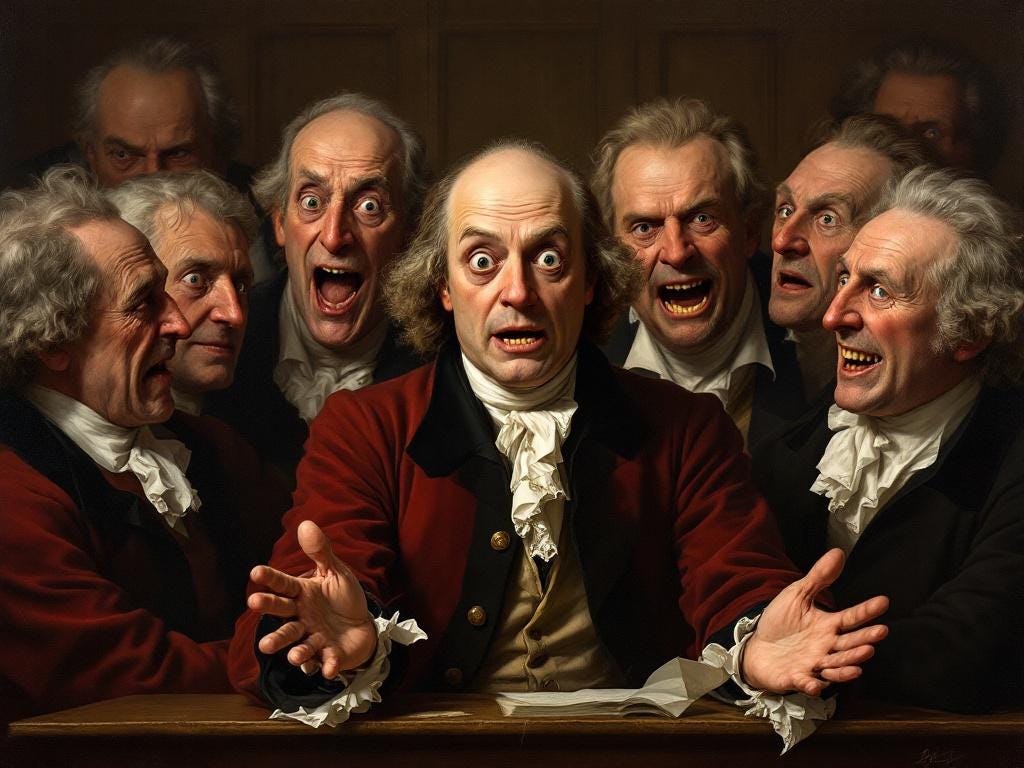
The colonists were swooned by the news of Otis’s words against British customs officers. Otis Jr and his father quickly won unanimous approval as colonial representatives of the Massachusetts colony (the colonial House of Representatives existed before the Declaration of Independence was signed). Otis soon led a campaign to convince Massachusetts legislature to reject all writs of assistance. In this regard Otis succeeded on April 17, 1762 when the British lost influence over the legislative body of the Massachusetts Bay Colony. On that day Otis’s supporters convinced the body to dismiss all British representatives in favor of the Writs of Assistance from the colonial Massachusetts House of Representatives for good. This weakened British factional influence over Massachusetts House of Representatives from that point on.3 Unfortunately the British still had ties in the Massachusetts Superior Court. And I will next explain how the colony reacted to Writs of Assistance during the Polly Affair.
Up Next: Hostility to General Search and Seizure in the Colonies
In the next article I will demonstrate how Otis’s words inspired the colonists to publicly resist the Writs of Assistance in acts of civil disobedience. These public demonstrations continue to be reviewed by US Supreme Court in court cases involving the Fourth Amendment to this day.
Coke, Sir Edward. "Sir Edward Coke Declares That Your House Is Your Castle and Fortress, 1604." The Selected Writings of Sir Edward Coke, edited by Steve Sheppard, Liberty Fund, 2003, Online Library of Liberty. Accessed 16 May 2026.
Solove, Daniel J. Nothing to Hide: The False Tradeoff between Privacy and Security. Yale University Press, 2011.
“Old State House.” Celebrate Boston, www.celebrateboston.com/sites/old-state-house.htm.