
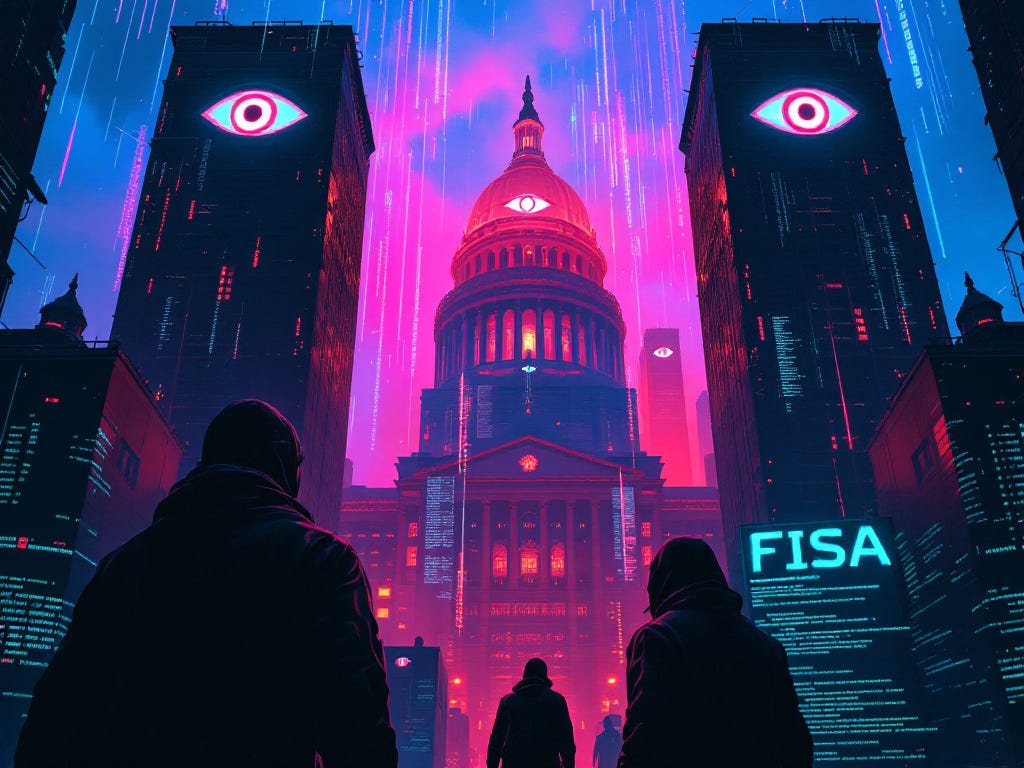
In the past surveillance investigations conducted under The Electronic Communications Privacy Act and FISA were separate. Investigators investigating a crime that was not classified as foreign threat would not be able to conduct more intrusive surveillance under FISA. By law their surveillance would be restricted under the ECPA.
But there is a loophole to every contact.
You see if investigators under FISA learned about an ordinary crime that was not tied to foreign threats they were usually not allowed to work with investigators serving under the ECPA.
In the case where the government does both there is a way the investigation is handled. Before FISA’s powers grew criminal investigators were separated from foreign intelligence collectors. This would stop criminal investigators to ask foreign intelligence collectors for aid. That would violate the Fourth Amendment.
However, foreign intelligence collectors were allowed to share news of crimes to criminal investigators (?!!) However, the catch was criminal investigators were banned from taking charge of the surveillance.
Foreign intelligence collectors gained more power after 9/11. Advocates argued restrictions against FISA prevented the FBI and CIA from taking sufficient action. They argued that foreign intelligence agents were spying on some of the terrorists. However they refused to share information because they believed it was banned under FISA.
In response to such criticisms, the Bush Administration succeeded in expanding FISA’s powers. They changed a simple wording from the FISA Act: now FISA applied when foreign intelligence served “a significant purpose”. This allowed Attorney General John Ashcroft to remove the FISA wall. So now all the US Government has to do is give one purpose of the investigation that has nothing to do with a criminal investigation—although there can be several other criminal investigations going on.
This is a problem in terrorist investigations since they have a broad scope and several purposes. This is the US Government’s ultimate loophole around the Electronic Communications Privacy Act: now they can use intelligence gathered under FISA in court trials. Yet Solove argues FISA weakened restrictions cannot regulate criminal investigations. This is why the ban against criminal investigators reaching out for help from foreign collectors is so important. Under the ECPA there has to be probable cause you are a criminal in action before any surveillance can begin. Under FISA you can be subject to surveillance even if you are totally innocent.
The worst part is there are no constitutional checks on FISA’s surveillance activities! They are held in secret. We should be concerned with this behavior just as we should appalled by the behavior of the Russian Secret Police: secret legal behavior leaves no room for accountability before the public and leads to scandals such as those faced by the FBI after the COINTELPRO leaks.
To illustrate how abusive the government’s power can get left unknown and unchecked consider this. In December 2005 the New York Times reported that after the 9/11 attacks the NSA was authorized to conduct warrantless wiretapping of American citizens’ phone calls—just as the FBI did before the COINTELPRO scandal.
The thing is, in 2005, most American have never even heard of the NSA. They heard of the FBI by the time COINTELPRO was leaked. But the NSA was founded in 1952—over 50 years ago. Originally the NSA was formed in 1952 by President Truman to decipher encrypted messages sent by foreign nations. There is a good reason for that. If the US can steal the military messages of their opponents they can outwit them in warfare. This was the real effect of cracking Germany’s Enigma in World War II—by cracking Enigma the Allied Forces managed to surprise the Axis Powers on D-Day. So from this rationale we should support Truman.
According to James Bamford it is the most powerful spy organization in human history.
And as such they began the “Terrorist Surveillance Program” after 9/11 under President Bush’s Administration. The NSA listened on international phone calls whenever they assumed it was associated with terrorist organizations. These wiretappings took place without seeking a warrant or court order—ignoring regulation and oversight required by the law.
The NSA also obtained phone records from major phone companies—again without judicial oversight. Even the NSA’s warrantless surveillance actually violated the Fourth Amendment. This is a federal law that required judicial oversight and court orders to authorize the wiretapping. Surprisingly the Bush Administration argued they had the right to authorize the NSA to do this as part of the president’s power to wage war. Solove’s summary of the “war powers” argument is simple: the US President argues he has the right to bypass the law since we are at war with foreign terrorist organizations.
Instead of challenging the US President Congress simply gave the US President Administration a free pass by granting the “Terrorist Surveillance Program” with new enabling legislation. This is similar to how tyrant rulers such as Julius Caesar, Napoleon, and Hitler gained power—the institutions for checks and balances let them claiming one person would generally make better decisions than a whole, organized team of people will. If you are wondering why its because people are desperate and think careful thought and action would be too slow to act compared to the decisions of one person. And the sad part is—the opposite is true—careful thought and action from these institutions is what’s going to save you. Countries like Germany rebuild their governments as democratic republics first and slowly rebuilt their economies after World War II—even starting from financial ruin from the war.
Germany’s Political and Economic Miracle after World War II is honestly a case study on how to rebuild a government (and yes according to the work “Why Nations Fail” you must do that first!) and then fix an economy afterwards.
It is not a waste of time to study other nations’ governments. Remember the US Government is modeled after the European Government. And we can plenty from the story on how the GDPR was passed.
In the next article I will continue my discussion on FISA.